CBN Benefits: What It's Good For + Common Uses
If CBG is the fresh morning coffee of the cannabis plant, CBN is the aged wine you sip before bed.
For decades, Cannabinol (CBN) was dismissed as a mistake. It was the unwanted byproduct of bad storage. When Delta 9 THC is exposed to oxygen, ultraviolet light, and time, it degrades. It loses its potent psychoactive punch, its hydrogen molecules shift, and it slowly transforms into CBN.
In the past, finding high levels of CBN in your cannabis meant you had done a poor job of keeping your stash fresh. It meant your weed was old. However, users eventually noticed something interesting about this "spoiled" product.
It didn't get them very high, but it made them incredibly sleepy. It provided a heavy, glued-to-the-couch sensation that became a stereotype of stoner culture.
Today, that "spoilage" is a feature, not a bug. CBN has been rebranded as the ultimate sleep aid. It is widely marketed as a natural alternative to pharmaceutical sedatives. While it is technically mildly psychoactive (about 10% to 25% as potent as THC), nobody takes it to party. They take it to turn the lights out.

Time and transformation: The aging process of CBN.
What Is CBN Good For?
The utility of CBN is singularly focused. While other cannabinoids boast a wide spectrum of uses from focus to appetite to inflammation, CBN has one primary job in the eyes of the consumer: Sleep.
Practically, CBN is used almost exclusively as a nighttime supplement. It is the go-to cannabinoid for insomnia, restlessness, and the inability to stay asleep.
It bridges the gap between natural supplements like herbal tea and heavy pharmaceutical sedatives. Beyond sleep, there is a growing interest in its potential as a pain reliever and neuroprotectant, but these are secondary to its reputation as a sedative.
If you are shopping for CBN, you are likely looking for a way to shut your brain off at 11:00 PM.
Benefits of CBN
To understand the benefits of CBN, you have to understand its chemistry. Because it is a degradation product of THC, it retains some of that molecule's binding affinity for the CB1 and CB2 receptors, but the connection is much weaker.
This weak connection provides a sense of physical relaxation without the mental "noise" of a full THC high.
Sedation and Sleep Aid
This is the headline benefit. CBN is colloquially known as the "sleepy cannabinoid." Users report that it provides a heavy, weighted sensation that makes eyelids feel heavy.
The mechanism is believed to be synergistic. While early research from the 1970s suggested CBN was a powerhouse sedative on its own, modern understanding suggests it works best via the "Entourage Effect." It seems to potentiate the sedative properties of other cannabinoids and terpenes.
When combined with a tiny amount of THC or specific terpenes like myrcene, CBN acts as an anchor, dragging the user down into deep rest. It is particularly favored by those who want to avoid the grogginess of melatonin.
Pain Relief (Analgesic)
While less famous than CBD for pain, CBN has distinct analgesic properties. Research indicates it interacts with neurons sensitive to capsaicin (the heat in chili peppers).
By desensitizing these neurons, CBN may help reduce pain signaling. This makes it a potential tool for conditions like fibromyalgia or chronic muscle pain, especially when that pain is the primary reason the person cannot sleep.
It attacks the problem from two angles; it dulls the pain perception and induces the drowsiness needed to ignore it.

Calming the nerves: CBN's potential for pain relief.
Neuroprotection (ALS Potential)
One of the most promising areas of CBN research involves Amyotrophic Lateral Sclerosis (ALS). In animal models, CBN was shown to delay the onset of the disease.
It acts as an antioxidant and neuroprotectant, shielding nerve cells from damage and death. While this is strictly preclinical and we cannot claim it cures ALS, it points to a unique biological function that differs from CBD and THC. It suggests that CBN might have a specific role in preserving nerve health as we age.
Appetite Stimulation
Unlike THCa or CBD, which tend to be neutral or suppressive regarding appetite, CBN appears to act like its parent, THC. It stimulates the appetite. In rat studies, subjects given CBN ate significantly more for longer periods.
This is a crucial distinction for users. If you take a CBN gummy for sleep, do not be surprised if you wake up with a midnight craving. For patients needing to gain weight who cannot tolerate the high of THC, CBN offers a milder alternative to trigger hunger.
Anti-Bacterial Properties
In a similar vein to CBG, CBN has demonstrated powerful antibacterial capabilities. Research has shown it to be effective against antibiotic-resistant strains of bacteria like MRSA.
This speaks to the plant's evolutionary defense mechanisms. As the resin ages and degrades, it remains chemically active against pathogens. While you won't be prescribed CBN for an infection anytime soon, it adds to the "wellness" profile of the compound.
How to Get Better Results
Getting results with CBN is all about the combination. Pure CBN isolate on its own can actually be somewhat underwhelming. Many users find that if they take pure CBN, they don't feel much. The magic happens in the mix.
For the best sleep results, look for products that ratio CBN with CBD or Delta 9. A 1:1 ratio of CBD to CBN is a popular non-intoxicating blend for relaxation.
However, if you are comfortable with a slight high, a product containing 5mg of THC and 5mg of CBN is widely considered the "heavyweight champion" of sleep edibles. The THC engages the brain, and the CBN steers that engagement toward sleep.
Timing is also vital. CBN is not a knockout gas. It takes time to absorb. Take your oil or gummy 45 minutes to an hour before you want to be asleep. If you wait until you are staring at the ceiling to take it, you will likely be awake for another hour waiting for it to kick in.
CBN Benefits Chart
Since CBN is a specialist, this chart helps clarify exactly what you can expect from it versus the generalists like CBD.
| Benefit Goal | What People Notice | Best Forms | Timing | Evidence Level | Notes |
|---|---|---|---|---|---|
| Sleep/Insomnia | Heavy eyelids, body relaxation. | Oil, Gummies | 1 hour before bed. | Moderate (Synergistic) | Works best combined with THC/CBD. |
| Pain Relief | Dullness of muscle aches. | Topicals, Oil | As needed (night). | Moderate (Animal Models) | Distinct mechanism from opioids. |
| Neuroprotection | No felt effect (preventative). | Tinctures | Daily/Nightly. | Emerging (Preclinical) | ALS research is the primary focus. |
| Appetite | Increased hunger. | Edibles | 30-60 mins. | Strong (Animal Models) | Be prepared for late-night snacking. |
| Relaxation | Mild sedation, "couch lock." | Vapes (rare), Oil | 15-45 mins. | Mostly Anecdotal | "Aged weed" effect. |
What the Science Actually Supports
We need to be transparent about the "mythology" of CBN. You will often hear a claim that "5mg of CBN is as strong as 10mg of Diazepam (Valium)." This claim is largely unsubstantiated. It traces back to a misinterpretation of research from the 1970s.
The reality of the science is that CBN is a mild sedative on its own. Human trials showing it acts as a strong sleeping pill in isolation are scarce.
However, the science strongly supports the "Entourage Effect." When CBN is present with THC, the sedation is significantly more pronounced than with THC alone.
The strongest hard evidence lies in the antibacterial and neuroprotective studies on rodents. These are lab-controlled environments where CBN shows distinct, repeatable chemical interactions. For the average human user, the "evidence" is largely experiential. Millions of people swear by it for sleep, but clinical trials are still catching up to explain exactly how it works.
CBN vs Other Cannabinoids
Comparing CBN to its relatives helps contextualize why you would buy this specific bottle.
CBN vs. CBD: CBD is for the day; CBN is for the night. CBD relieves anxiety without making you tired (usually). CBN is specifically used to make you tired. If you take CBN in the morning, you might find yourself needing a nap by noon. They are often used together, but their designated times of day are opposite.
CBN vs. Melatonin: This is the most common consumer choice. Melatonin is a hormone that signals to your body that it is time to sleep. CBN is a cannabinoid that relaxes the body and mind. Melatonin can cause vivid dreams and grogginess; CBN tends to offer a smoother exit. Many people stack them, but they work on entirely different biological systems.
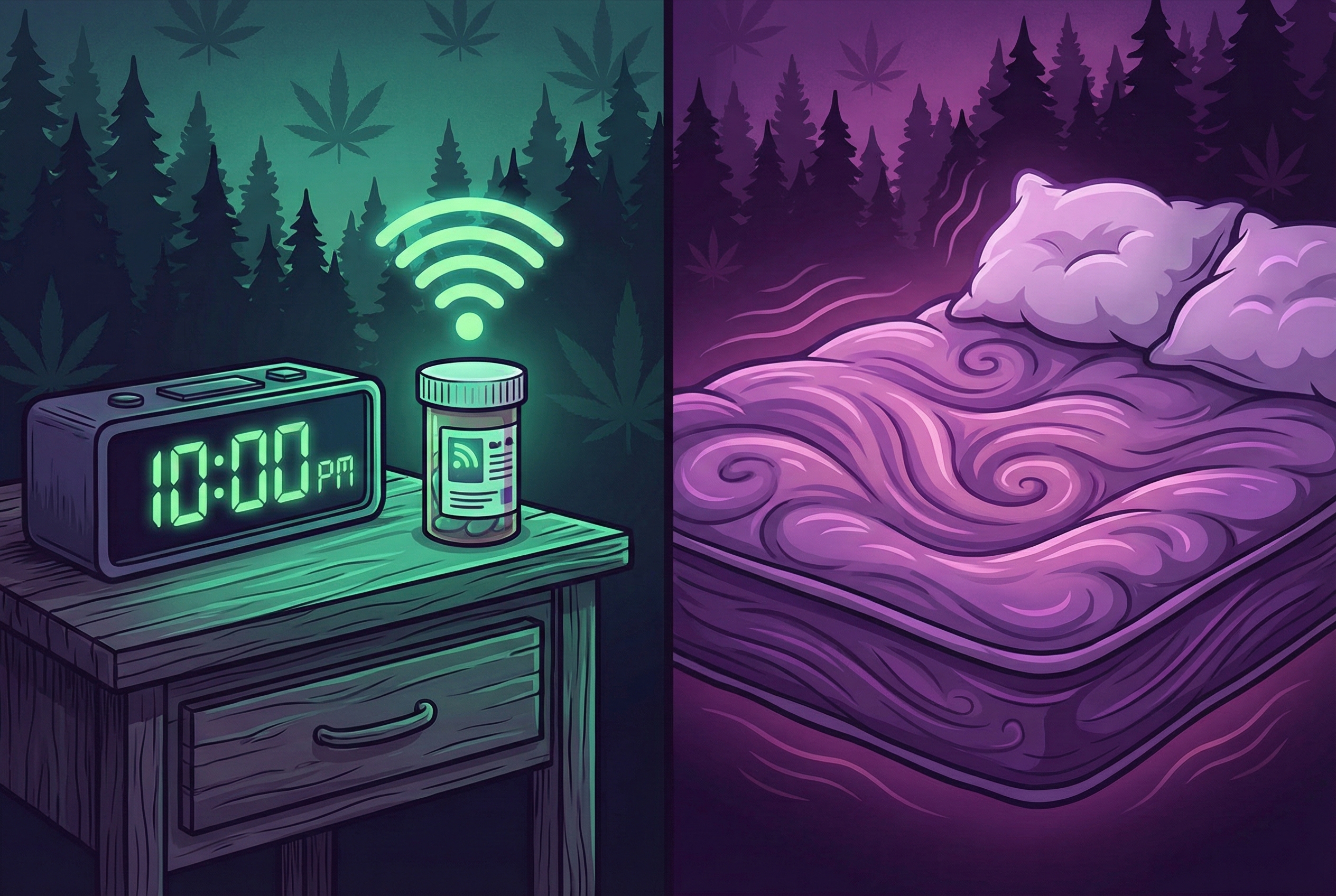
Signal vs. Sensation: Melatonin sets the clock, CBN provides the bed.
CBN vs. Delta 9 THC: Delta 9 is the parent; CBN is the retired elder. Delta 9 is four times stronger and much more cerebral. CBN retains about 10% to 25% of that psychoactivity, but it directs it entirely toward the body. You will feel a buzz with CBN, but it is a "couch-lock" buzz rather than a creative euphoria.
Benefits: Key Takeaways
CBN is the master of the nighttime routine. It is primarily used for sleep support, pain relief, and relaxation.
- It differentiates itself from the rest of the cannabinoid family by being a product of age and degradation, turning the loss of potency into a gain in sedation.
- It is best used by those who need to fall asleep but want to stay natural.
- While the science is still debating just how strong it is on its own, the user consensus is clear: when you want to rest, you reach for CBN.
Frequently Asked Questions
What is CBN used for?
CBN is overwhelmingly used as a sleep aid. Consumers use it to combat insomnia and restlessness. It is also used by some for pain management, particularly muscle pain that interferes with sleep.
What is CBN good for?
It is good for "powering down." It is excellent for people who feel physically restless at night. It is also good for those who want a mild appetite stimulant without the intense high of standard cannabis.
What does CBN do for you?
It binds weakly to cannabinoid receptors to induce a state of physical relaxation. It is believed to potentiate the sedative effects of other cannabinoids, acting as a "heavy" anchor for the experience.
How long does it take to notice benefits?
Edibles and tinctures usually take 30 to 60 minutes to metabolize. Because it is a sedative, the "benefit" is feeling tired. You should plan your evening around this timeline so you aren't fighting the drowsiness.
Does CBN get you high?
It can. CBN is mildly psychoactive. If you take a very large dose, you may feel a "stoned" sensation, though it is usually described as more physical and less mental than a THC high.
Can you combine CBN with melatonin?
Yes. Many products sell them together. Melatonin sets the circadian rhythm (the clock), and CBN relaxes the body (the mechanism). They can work synergistically for stubborn insomnia.